


Types of Housing Systems in the Philippines

Types of Housing Systems in PH
Cast-in-place concrete
Precast concrete
CHB construction
Light gauge steel
ICF
AAC blocks
Modular/prefab systems
3D panel system
Engineered bamboo
Container housing
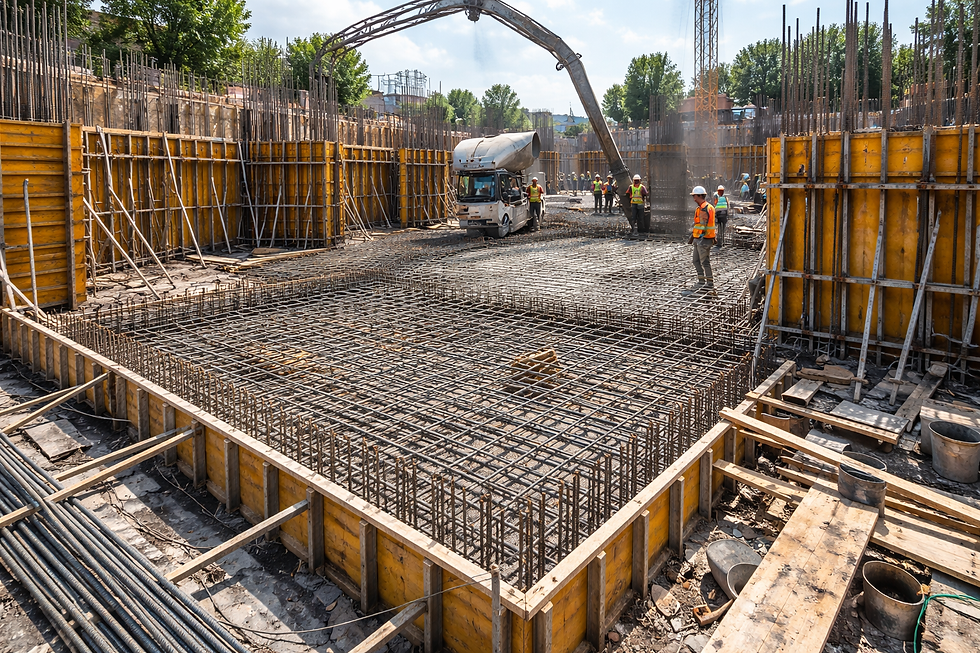
Cast-in-place concrete (also called site-cast concrete) on of the housing system used in the Philippines is concrete that is poured and cured directly at the construction site, inside temporary molds called formwork.
Instead of manufacturing concrete parts in a factory (like precast), everything is done on-site — from placing reinforcement bars (rebar) to pouring and curing.

Basic Process of cast-in-place as one of the housing systems in the Philippines.
Formwork Installation – Wood, steel, or aluminum molds are set up.
Rebar Placement – Steel reinforcement is installed for strength.
Concrete Pouring – Fresh concrete is poured into the forms.
Vibration – Removes air pockets.
Curing – Concrete hardens over 7–28 days.
Form Removal – Forms are stripped after initial strength gain.
Where It’s Commonly Used
Residential house slabs
Beams and columns
Retaining walls
Foundations
Staircases
Commercial buildings
High-rise structures
Advantages
✅ Strong monolithic structure (fewer joints)
✅ Flexible design (custom shapes possible)
✅ Good for irregular layouts
✅ High durability
✅ Ideal for seismic areas
Typical Strength
Residential: 3,000–4,000 psi
Commercial: 4,000–6,000 psi
High-rise: Can go higher depending on structural design
Cast-in-Place | Precast |
Poured on site | Made in factory |
Slower | Faster installation |
More flexible | Standardized sizes |
Labor intensive | Equipment intensive |

Precast concrete is concrete that is cast, cured, and finished in a controlled factory environment, then transported to the construction site for installation.
This is different from cast-in-place concrete, which is poured and cured directly on-site.
Why Precast Concrete is Used?
1️⃣Better Quality Control
Because it’s made in a factory, temperature, moisture, and curing time are controlled. This results in:
Higher strength
More consistent finish
Fewer defects
2️⃣ Faster Construction
Since components are ready-made:
Installation is quick
Less on-site labor
Reduced construction time
3️⃣ Cost Efficiency
Less material waste
Lower labor costs
Faster project turnover
4️⃣ Strong and Durable
High compressive strength
Fire-resistant
Weather-resistant

Common Precast Concrete Products
Wall panels
Columns
Beams
Hollow core slabs
Stairs
Retaining walls
Precast fences
Drainage boxes
Where It Is Commonly Used
Residential houses
Condominiums
Warehouses
Commercial buildings
Parking structures
Infrastructure (bridges, tunnels, drainage)
Factor | Precast | Cast-In-Place |
Location | Factory | On-site |
Speed | Faster | Slower |
Quality Control | High | Depends on site |
Weather Impact | Minimal | Affected by weather |
Initial Cost | Slightly higher | Slightly lower |
Considerations
Transportation cost
Crane requirement during installation
Limited design changes once produced
Joint sealing and waterproofing needed

CHB Construction (Concrete Hollow Block Construction)
CHB construction means building walls using Concrete Hollow Blocks (CHB). In the Philippines, this is the most common method for residential houses, perimeter fences, and small buildings.
What is CHB?
Concrete Hollow Blocks are rectangular blocks made of:
Cement
Sand
Gravel (fine aggregates)
Water
They have hollow cores to:
Reduce weight
Improve insulation
Allow steel bars (rebars) and concrete filling for strength
Standard CHB Sizes (PH setting)
Common thickness:
4 inches (100mm) – interior partitions
5 inches (125mm) – light load walls
6 inches (150mm) – exterior/load bearing
8 inches (200mm) – heavy structural walls
Typical dimension:
40 cm length
20 cm height

Basic Steps in CHB Construction
1️⃣ Layout & Foundation
Mark wall lines
Build concrete footing
Install vertical rebars (starter bars)
2️⃣ Block Laying
Apply mortar (cement + sand mix)
Align blocks using level and string line
Maintain consistent mortar joints (10mm typical)
3️⃣ Reinforcement
Insert vertical and horizontal rebars
Fill hollow cores with concrete (grouting)
4️⃣ Plastering
Apply cement plaster finish
Smooth and prepare for paint
Typical Mortar & Concrete Mix
Mortar: 1 cement : 3 sand
Structural concrete: 1 cement : 2 sand : 3 gravel
(Actual mix depends on structural engineer’s design.)
Advantages of CHB Construction
✅ Affordable
✅ Easy to source materials
✅ Fire-resistant
✅ Durable
✅ Good sound barrier
Common Problems (If Poorly Done)
⚠️ Cracks due to:
Weak mortar mix
Poor curing
Lack of reinforcement
No control joints
⚠️ Hollow blocks not fully grouted
⚠️ Misaligned walls
Type | Cost | Strength | Speed |
CHB | Moderate | Strong (if reinforced) | Medium |
AAC Blocks | Higher | Lightweight | Fast |
Precast Panels | Higher | Strong | Very Fast |

Light Gauge Steel (LGS) Construction
Light Gauge Steel (LGS) is a modern construction system that uses cold-formed galvanized steel sections instead of traditional concrete hollow blocks (CHB) or full cast-in-place concrete walls.
It’s becoming more common in residential houses, townhouses, mid-rise buildings, and even commercial structures in the Philippines.
What is Light Gauge Steel?
Light Gauge Steel uses:
Thin, cold-formed steel studs and tracks
Prefabricated or site-assembled framing
Bolted or screwed connections (minimal welding)
Wall panels, roof trusses, and floor systems made from steel sections
It works like a “steel skeleton” of the house.

Where It’s Commonly Used in PH?
Residential houses (1–3 storey)
Townhouses and duplex units
Low to mid-rise condominiums
Warehouses and commercial units
Add-on second floors for existing houses
Advantages of Light Gauge Steel
1️⃣ Faster Construction
Components can be pre-engineered.
Less curing time compared to concrete.
Cleaner job site.
2️⃣ Termite-Proof
Unlike wood framing, steel is not vulnerable to termites.
3️⃣ Lightweight but Strong
Good strength-to-weight ratio.
Reduces foundation load.
4️⃣ Earthquake Performance
Flexible system.
Performs well in seismic zones (important in the Philippines).
5️⃣ Consistent Quality
Factory-controlled production.
Uniform dimensions.

Considerations
Needs skilled installers.
Proper insulation is required (heat & sound control).
Corrosion protection is important (galvanized coating must be intact).
Initial material cost may be higher than CHB, but labor savings can offset it.
Basic Components
C-studs
U-tracks
Steel joists
Roof trusses
Sheathing boards (fiber cement, gypsum board, etc.)
Screws and connectors
Feature | Light Gauge Steel | CHB | Cast-in-Place |
Speed | Fast | Moderate | Slow |
Weight | Lightweight | Heavy | Very Heavy |
Earthquake | Flexible | Brittle | Strong but heavy |
Termite | Safe | Safe | Safe |
Labor | Skilled | Common | Skilled |
Is Light Gauge Steel Good for Philippine Housing?
Yes — especially for:
Flood-prone areas (lighter structures)
Fast-track housing projects
Modern architectural designs
Expansion or vertical extensions
However, correct engineering design is critical.
Insulated Concrete Forms (ICF)

What is Insulated Concrete Forms (ICF)?
Insulated Concrete Forms (ICF) is a modern building system where hollow foam blocks (usually expanded polystyrene or EPS) are stacked like Lego, reinforced with steel bars, and then filled with concrete.
Once the concrete hardens, the foam stays in place—creating a solid reinforced concrete wall with built-in insulation on both sides.

How ICF Works (Step-by-Step)
Footing & rebar preparation
ICF blocks are stacked (interlocking foam forms)
Steel reinforcements are inserted
Concrete is poured into the cavity
Wall cures → forms stay permanently
Exterior and interior finishing applied
Why ICF is Gaining Popularity?
✅ 1. Superior Insulation
High R-value
Reduces heat transfer
Lower electricity bills (especially useful in hot climates)
✅ 2. Strong & Durable
Reinforced concrete core
Excellent resistance to:
Typhoons
Earthquakes
Fire
Termites
✅ 3. Soundproofing
Great acoustic insulation
Ideal for:
Homes near highways
Condominiums
Schools
Hospitals
✅ 4. Faster Construction
Less labor compared to CHB
Walls and insulation installed in one system

Feature | ICF | CHB |
Structural Strength | Very High | Moderate |
Thermal Insulation | Excellent | Poor |
Soundproofing | Excellent | Low |
Energy Efficiency | High | Low |
Initial Cost | Higher | Lower |
Long-Term Savings | Higher | Lower |
Is ICF Suitable in the Philippines?
Yes — especially for:
High-end residential homes
Premium subdivisions
Flood-prone or typhoon-prone areas
Sustainable / eco-friendly developments
It works well in tropical climates because insulation reduces indoor heat buildup.
AAC Blocks (Autoclaved Aerated Concrete)

What Are AAC Blocks?
Autoclaved Aerated Concrete (AAC) blocks are lightweight, precast building materials made from cement, lime, silica sand, water, and a small amount of aluminum powder.
During production, the aluminum creates air bubbles, forming millions of tiny pores.
The blocks are then cured in a high-pressure steam chamber (autoclave), making them strong yet lightweight.

Why AAC Blocks Are Gaining Attention in the Philippines?
With rising construction costs and demand for faster build times, AAC is slowly becoming an alternative to:
Concrete Hollow Blocks (CHB)
Cast-in-place concrete
Traditional masonry systems
Especially for:
Residential homes
Townhouses
Mid-rise buildings
Commercial structures
Key Advantages of AAC Blocks
1. Lightweight but Strong
AAC blocks are about 3–4 times lighter than CHB.This means:
Faster installation
Reduced structural load
Potential savings on foundation and columns
2. Better Thermal Insulation
AAC has built-in air pockets that:
Reduce indoor heat
Improve energy efficiency
Lower aircon consumption
Very helpful in Philippine tropical weather.
3. Sound Insulation
AAC walls help reduce outside noise, ideal for:
Homes near highways
Urban residential communities
Mixed-use developments
4. Fire Resistance
AAC blocks are highly fire-resistant compared to traditional materials.
5. Faster Construction
Larger block sizes
Thin-bed mortar application
Cleaner installation
Less plastering required due to smoother surfaces.

Disadvantages to Consider
No system is perfect. AAC has some considerations:
Higher material cost compared to standard CHB
Requires trained installers
Needs proper anchoring system for cabinets and fixtures
Typical Uses in the Philippines
AAC blocks are commonly used for:
Exterior walls
Partition walls
Townhouse developments
Low to mid-rise condominiums
Commercial buildings
Some premium subdivisions and modern projects are already shifting to AAC for efficiency and long-term performance.
Feature | AAC | CHB |
Weight | Lightweight | Heavy |
Installation Speed | Faster | Slower |
Heat Insulation | Better | Low |
Sound Insulation | Good | Moderate |
Cost | Higher upfront | Lower upfront |
Structural Load | Reduced | Higher |
Is AAC Worth It?
For developers and homeowners who want:
Faster build time
Energy-efficient homes
Cleaner construction
Long-term performance
AAC can be a smart choice.
For budget-driven projects, CHB may still be more practical.
Modular / Prefabricated Construction Systems

Modular or prefabricated (prefab) systems are construction methods where parts of a house or building are manufactured in a factory, then delivered to the site for assembly.
Instead of building everything on-site like traditional CHB or cast-in-place, large sections are pre-made for faster and cleaner installation.
1. Volumetric Modular (Full Modules)
What it is:
Entire rooms (bedroom, bathroom, kitchen) are built in a factory and delivered as finished modules.
Key Features:
Delivered 70–90% complete
Includes walls, flooring, electrical, plumbing
Assembled on foundation using cranes
Best For:
Residential housing projects
Staff housing
Low-rise condos
Disaster-resilient communities

2. Panelized System
What it is:
Walls, floors, and roof panels are pre-cut and fabricated in factories, then assembled on-site.
Key Features:
Faster than traditional CHB
Less material waste
Can use steel frame or wood frame
Can integrate insulation (SIP panels)
Best For:
Subdivision developments
Townhouses
Mid-cost housing

3. Hybrid Modular (Prefab + Traditional)
What it is:
Combination of prefab components (like bathrooms or wall panels) with cast-in-place concrete or CHB structure.
Key Features:
Flexible design
Lower construction time
Reduced labor cost
Easier quality control
Best For:
Mixed-use buildings
Mid-rise projects
Developers transitioning from traditional systems

Advantages of Modular / Prefab Systems
✅ Faster construction (30–50% faster)
✅ Controlled factory quality
✅ Less weather delays
✅ Lower labor dependency
✅ Cleaner site (less waste)
✅ Predictable costing
Limitations
❌ Transportation cost for large modules
❌ Requires proper logistics planning
❌ Initial setup cost for factory production
❌ Design flexibility can be limited (depending on system)
Is Modular Popular in the Philippines?
It is growing, especially for:
Economic housing
Government housing programs
Disaster-resilient homes
Remote island projects
Hotel and dormitory developments
However, traditional CHB and cast-in-place concrete still dominate due to familiarity and labor availability.
When Should a Developer Use Modular?
Tight project timeline
Large repetitive housing units
Labor shortage
Controlled budget requirement
Remote site with limited skilled workers

3D Panel System (EPS Sandwich Panel Construction)
The 3D panel system (also called EPS sandwich panel or wire mesh panel system) is a modern building method used for houses, low-rise buildings, and even mid-rise structures.
🔎 What It Is
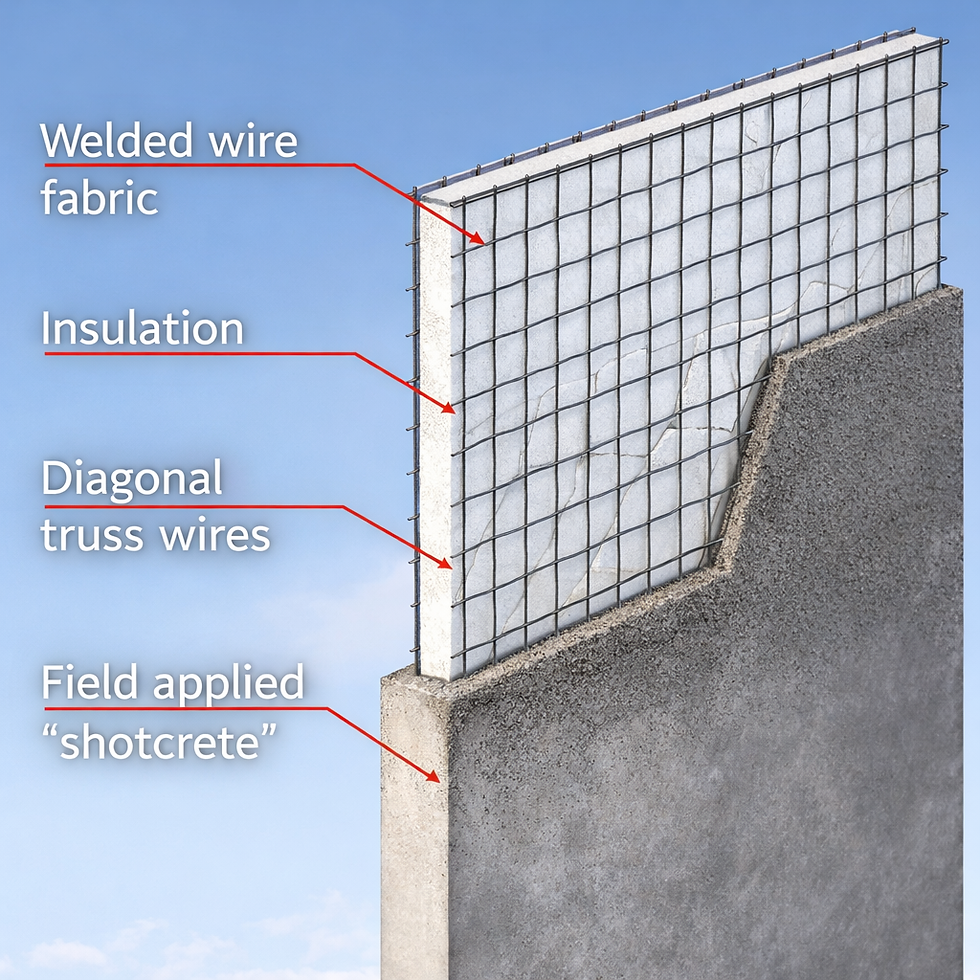
A factory-made panel composed of:
Expanded Polystyrene (EPS) core (insulation)
Welded wire mesh on both sides
Connected by diagonal steel trusses
On site, panels are:
Installed as walls (and sometimes floors/roofs)
Tied to the structural frame
Covered with shotcrete or plaster on both sides→ Result: a solid, insulated reinforced concrete wall.

How It’s Built (Simple Flow)
Layout & footing preparation
Install vertical 3D panels
Add steel reinforcements where needed
Electrical & plumbing rough-ins inside the EPS core
Apply shotcrete (sprayed concrete)
Curing & finishing
Advantages
Faster construction vs CHB
Lightweight panels (easy handling)
Good thermal insulation (cooler interiors)
Better seismic performance when properly engineered
Reduced cracking compared to traditional CHB
Lower labor requirement
Considerations
Requires trained installers
Needs proper shotcrete application equipment
Engineering design is important (especially for multi-storey)
Initial material cost may be higher than CHB, but labor savings can offset this
Where It’s Commonly Used in the Philippines
Socialized housing projects
Medium-cost subdivisions
Disaster-resilient housing
Some private custom homes
System | Speed | Strength | Insulation | Labor |
CHB | Moderate | Good | Low | High |
Cast-in-place | Slower | Very High | Low | High |
Precast | Fast | High | Moderate | Moderate |
3D Panel | Fast | High | High | Low–Moderate |

🌿 Engineered Bamboo
Engineered bamboo is a modern construction material made by compressing, laminating, or strand-weaving natural bamboo into strong structural boards, panels, or beams.
It is being used in the Philippines for houses, resorts, commercial buildings, and even structural framing.
What Is Engineered Bamboo?
Unlike traditional kawayan poles, engineered bamboo is:
Treated against termites and moisture
Kiln-dried and pressure-bonded
Laminated into uniform planks or beams
Designed for structural or architectural use
Common forms:
Bamboo laminated boards
Bamboo glulam (glued laminated beams)
Strand woven bamboo panels
Bamboo plywood

How It’s Used in Philippine Construction?
In local projects, engineered bamboo is used for:
✅ Wall panels
✅ Floor boards
✅ Ceiling systems
✅ Structural beams
✅ Roof framing
✅ Staircases
✅ Exterior cladding
✅ Modular homes
It can be combined with:
Concrete foundations
Steel framing
Light gauge steel systems
Hybrid eco-houses

Strength & Performance
Engineered bamboo is known for:
High tensile strength (comparable to steel in tension)
Strong compression capacity
Lightweight but durable
Earthquake-resistant flexibility
Sustainable and renewable material
Because bamboo grows faster than hardwood, it is considered an eco-friendly alternative to traditional lumber.

Why It’s Becoming Popular in the Philippines?
Tropical climate friendly
Locally available raw material
Sustainable building trend
Lower carbon footprint
Modern tropical design appeal
Suitable for eco-resorts and farm developments
It’s commonly seen in:
Rizal farm resorts
Batangas eco-homes
Siargao beach houses
Tagaytay weekend homes
Important Considerations
Before using engineered bamboo:
Proper treatment is required for termites
Must follow structural engineering design
Fire rating requirements must be checked
Use accredited suppliers only
It should comply with Philippine building standards and structural requirements under the National Building Code.
System | Strength | Cost | Sustainability | Speed |
CHB | Moderate | Low | Low | Medium |
Cast-in-place | High | High | Low | Slow |
Light gauge steel | High | Medium | Medium | Fast |
Engineered bamboo | High | Medium | Very High | Fast |

Container Housing (Shipping Container Homes)
What is Container Housing?
Container housing uses repurposed shipping containers (usually 20-ft or 40-ft) as the main structural frame of a home or building.
These steel containers are modified, insulated, finished, and turned into livable spaces like houses, offices, cafés, and even dormitories.
In the Philippines, this system is already being used for:
Affordable house prototypes
Site offices for developers
Resort villas
Airbnb units
Farm houses
Commercial kiosks

Why It’s Becoming Popular in the Philippines?
1️⃣ Faster Construction
Structure is already built (steel box)
Less time compared to full concrete construction
Can be fabricated off-site
2️⃣ Strong Steel Structure
Designed to carry heavy loads (stackable)
Good resistance to wind when properly anchored
Ideal for typhoon-prone areas if engineered correctly
3️⃣ Modular & Expandable
Can combine multiple containers
Easy to expand later
Can go 1–3 storeys with proper structural design
4️⃣ Cost-Effective (Depending on Finish)
Lower structural cost
Higher savings if used for small units
Ideal for starter homes, farm lots, or rental units

Common Types in the Philippines
20-ft Single Unit (studio type)
40-ft 2-Bedroom Layout
2-Storey Container House
Container + Concrete Hybrid
Container Commercial Units
Important Considerations
🔹 Insulation is Critical
Philippine weather is hot and humid. Proper:
Rockwool insulation
Spray foam
Sandwich panels
Ventilation systems
…are necessary to prevent overheating.
🔹 Rust Protection
Anti-corrosion coating
Marine-grade paint
Proper waterproofing
🔹 Structural Engineering
Cutting openings (windows/doors) affects strength. Must be reinforced properly.
🔹 Permits & Compliance
Still requires:
Building permit
Structural plans
Electrical & plumbing permits
Type | Estimated Cost |
Basic 20-ft unit | ₱350,000 – ₱700,000 |
Finished 40-ft unit | ₱900,000 – ₱1.8M |
2-storey design | ₱1.8M – ₱3.5M+ |
Feature | Container | CHB |
Speed | Faster | Slower |
Structural Frame | Steel | Concrete |
Expandable | Modular | Fixed |
Heat Control | Needs insulation | More stable |
Long-Term Durability | Good if maintained | Very durable |
Best For:
Farm lot developments
Resort or Airbnb projects
Temporary housing
Commercial kiosks
Starter homes
Developers testing model units
Final Thoughts
The Philippine housing industry continues to evolve beyond traditional cast-in-place, precast, and CHB construction. With the introduction of steel framing, modular systems, AAC blocks, ICF, 3D panels, and other innovative methods, developers today have more options to improve efficiency, durability, sustainability, and long-term value.
Choosing the right construction system is not only a matter of cost—it is a strategic decision that affects structural integrity, project timeline, maintenance requirements, and overall market positioning. Whether the goal is faster turnover, stronger disaster resilience, better thermal performance, or premium quality finishing, understanding these alternatives allows developers and property investors to make informed decisions.
As housing demand in the Philippines continues to grow, embracing modern building technologies will play a key role in delivering safer, more sustainable, and future-ready communities.


Comments